Project Overview
NanoSTeW pursues an integrated research strategy in which material synthesis and additive manufacturing are developed in close feedback with one another. In the first stage, copper-based nanocomposite powders are produced by laser ablation in liquid and electrostatic deposition — physical techniques that avoid the contamination risks of conventional mechanical alloying and enable precise control of particle size and composition.
In the second stage, these bespoke powders are processed by Electron Beam Powder Bed Fusion (PBF-EB/M), an additive manufacturing method uniquely suited to copper because its high-vacuum environment prevents oxidation during melting. By tailoring both the powder composition and the PBF-EB/M process parameters, NanoSTeW aims to produce copper components with microstructures and functional properties — conductivity, strength, wear resistance — that cannot be achieved by existing production routes.
Objectives
Our research is structured around three core objectives:
-
Enhancing the mechanical performance of high-temperature copper alloys while maintaining high thermal and electrical conductivity.
-
Sustainable materials design based on resource-efficient alloy concepts and reduced environmental footprints.
-
Advancing additive manufacturing technologies for the production of high-performance functional components.
Copper-Based Nano Composite Powders
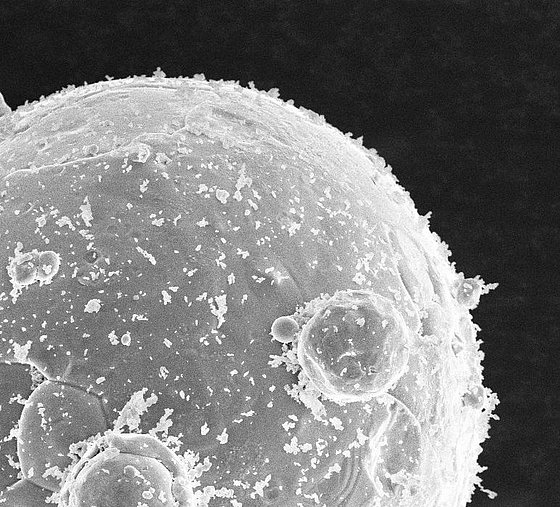
Copper-based nanocomposite powders are advanced materials consisting of a copper matrix reinforced with nanoscale phases, such as ceramic particles or other metals. These composites offer enhanced mechanical strength, improved wear and corrosion resistance, as well as excellent thermal and electrical conductivity. They are widely used in applications such as electronics and aerospace engineering.
While conventional methods like mechanical alloying are commonly used for their production, this project focuses on advanced physical techniques, specifically laser ablation in liquid and electrostatic deposition, to produce high-quality composites. These methods enable efficient, scalable production while also emphasizing the sustainable use of secondary materials.
Recent progress
Recent progress includes achieving gram-scale production of yttrium oxide (Y₂O₃) nanoparticles, with current productivity reaching approximately 1g/hour per batch, followed by their successful incorporation into copper micropowder to form composite feedstocks. In parallel, silver (Ag) nanoparticles have also been synthesized with controlled particle size and independently integrated into copper-based composite powders, establishing reproducible nanoparticle–copper systems for upcoming additive manufacturing trials.
Electron Beam Powder Bed Fusion

PBF-EB/M is an advanced additive manufacturing technique that enables the precise fabrication of complex copper components directly from powder. Unlike laser-based processes, PBF-EB/M operates in a high-vacuum environment, which effectively eliminates oxidation during melting and solidification - an essential advantage when processing oxygen-sensitive materials like copper.
This oxidation-free environment not only preserves the high electrical and thermal conductivity of copper but also allows for better control over the resulting microstructure. By adjusting parameters such as beam energy, scan strategy, and build temperature, it is possible to tailor grain size and texture, enabling the design of components with optimized functional properties.
As a result, PBF-EB/M is particularly suited for producing high-performance copper parts for applications where both material purity and precise microstructural control are critical.